
Carrion
DevolverDigitalAction
4.21.16K Reviews
- Version
- 1.0.44
- Installs
- 1.00M
- Age Rating
- Mature 17+
Screenshots
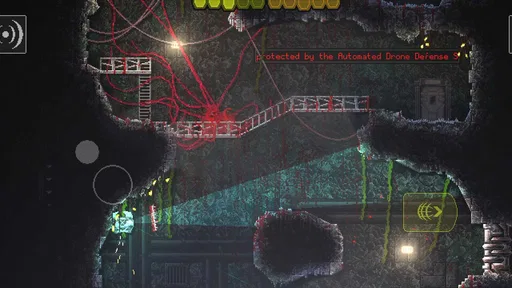
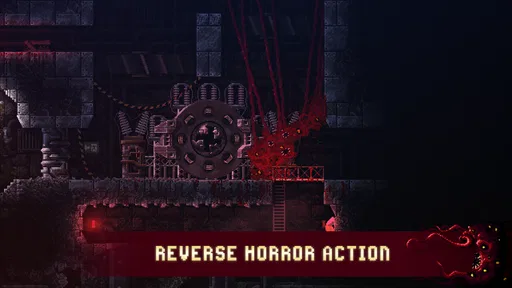
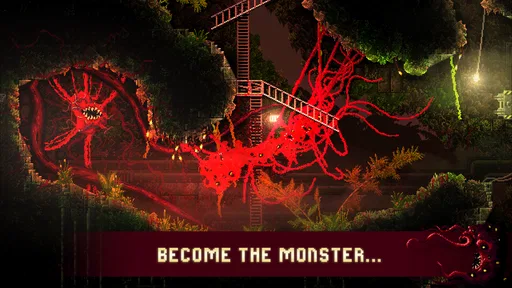
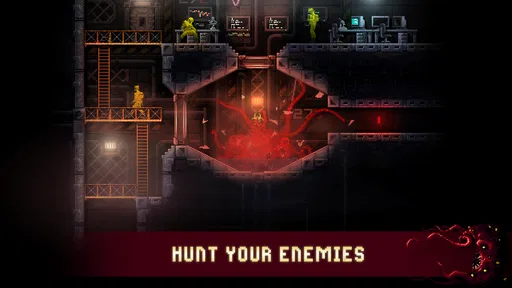
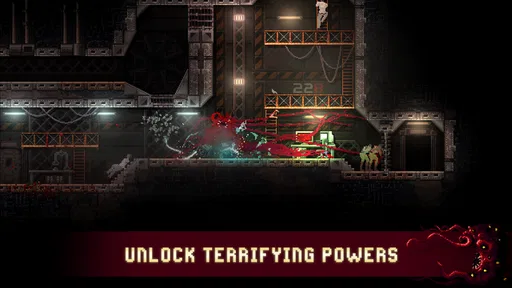
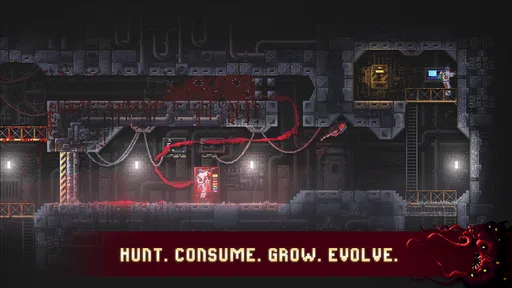
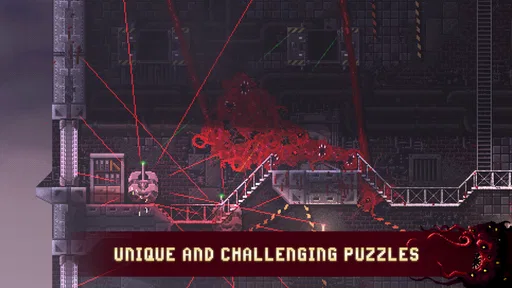

Our Review of Carrion
 Analysis by Appyee
What grabbed me about Carrion is that it turns the usual action-game role inside out. I am not guiding a soldier through a facility or helping a hero clear rooms. I control the threat itself: a shifting mass that hunts, consumes, and becomes more capable as it moves through a hostile environment. That single idea changes how I read every corridor. A locked passage is not just an obstacle, a group of armed people is not simply a target, and retreating can be as important as attacking.
DevolverDigital presents this as a mature action game, and that description matters. The experience is built around unsettling creature imagery, violent encounters, and the pleasure of being something the human characters cannot easily contain. It is free to start, carries a Mature 17+ age rating, and has already reached over one million installs. I can understand the appeal: the premise is immediately clear, but the way it feels to move and feed is unusual enough to support a full game rather than a short novelty.
Why controlling the monster is the whole point
The strongest capability here is direct control of an evolving creature rather than a conventional character. I stretch through spaces, approach danger from unexpected angles, and use the environment as part of my movement. That makes the action feel less like aiming down a corridor and more like solving a physical problem under pressure. The creature’s shape is not just decoration; it affects how I think about access, escape, and timing.
In most action games, progress comes from becoming a better-equipped version of the same kind of fighter. Here, growth feels more closely tied to understanding the creature’s behavior. I am constantly asking which route lets me reach prey safely, when to expose myself, and whether a tempting attack will leave me trapped. The fantasy works because the game allows me to feel powerful without making every situation effortless.
The store summary reduces the idea to a short hunting-and-growth phrase, but playing it reveals a more interesting rhythm. The satisfying moments are not only the attacks. They come from slipping through a narrow area, separating a threat from its support, finding a way around a barrier, and then returning with enough confidence to take a more aggressive route. The real strength is the connection between movement, survival, and discovery.
Movement changes how I read each room
Controlling a creature with a flexible body gives the game a different physical language from familiar side-scrolling action titles. I do not approach every room as a flat line from left to right. I look for openings, vertical routes, hiding places, and ways to use the creature’s reach without placing its vulnerable center in danger. Even when the objective seems simple, the route I choose can determine whether the next encounter feels controlled or chaotic.
This also makes exploration more active. I am not merely searching for collectibles or walking toward the next marker. I am testing the boundaries of the space. A passage that first appears inaccessible may become useful after I understand the creature’s movement better, while a route that looks open may be a poor choice because it exposes me too early. That kind of spatial reading is one of the game’s most distinctive pleasures.
For a player coming from standard action games, the adjustment may take time. The creature does not always feel as precise or predictable as a human character, and that is partly intentional. Its unusual movement creates the identity of the game, but it can also produce moments where I feel I lost control during a tense encounter. I had to stop expecting conventional platforming logic and start treating motion as something more fluid and opportunistic.
Hunting is more interesting when I avoid rushing
The aggressive premise might suggest constant forward momentum, yet rushing is often the least satisfying approach. I get better results when I pause long enough to understand the arrangement of a room. Which opponent can alert others? Where can I retreat? Is there a narrow route that protects me from a direct response? These questions turn a simple attack into a small tactical decision.
One useful habit is to separate exploration from commitment. I can investigate the edges of an area before fully entering it, then decide whether to strike or withdraw. This is especially valuable when I have just gained confidence from an easy encounter. The game encourages boldness, but it also makes overconfidence costly. I found that the best attacks usually began with a few seconds of observation rather than an immediate lunge.
Another practical tip is to treat consumed enemies as part of a longer plan instead of judging every encounter by speed. A quick victory may feel efficient, but a safer route can preserve momentum and leave me better prepared for what follows. That trade-off is easy to miss if I focus only on the creature’s violent power. The game is more enjoyable when I use that power selectively.
Growth gives exploration a purpose
The creature’s development is not simply a progress bar that tells me I am stronger. It changes the way I interpret previously visited areas. After learning more about what the creature can do, I become more willing to revisit a route and test it from a different angle. That makes the world feel connected rather than like a sequence of disconnected arenas.
This structure also rewards memory. I remember where I encountered resistance, where a retreat was possible, and which passages seemed to invite a return. I do not need to treat every room as a puzzle with one obvious answer. Instead, I build a mental map of opportunities and risks. For me, that was more rewarding than simply collecting upgrades and forgetting the surrounding layout.
The trade-off is that the game can feel less immediately transparent than a typical action title. If I expect every new capability to announce its value instantly, I may miss the subtler effect it has on route planning. The best way to appreciate the progression is to experiment after a change, especially in areas that previously felt awkward or dangerous.
How it feels in an everyday play session
Carrion works particularly well in short, focused sessions. If I have a little time after work, I can enter the game with a clear intention: explore a new section, learn how a particular threat reacts, or revisit an earlier route. The unusual control scheme gives even a brief session a strong identity, because I am not simply repeating the same familiar combat routine.
A realistic scenario would be playing with headphones for twenty or thirty minutes when I want something intense but not another competitive match. I can make progress through a compact stretch, stop after a difficult encounter, and return later without needing to coordinate with anyone else. The atmosphere makes the session feel concentrated, while the exploration gives me enough to think about after I put the phone down.
That said, it is not the best choice for a relaxed, low-pressure break. The mature presentation and predatory gameplay are central to the experience, so anyone looking for a cheerful puzzle game, a gentle platformer, or a social time-killer should choose something else. The age rating is not a minor label here; it accurately signals the tone and imagery I should expect.
Touch control requires patience
On a phone, the main question is whether the creature’s movement feels manageable with touch input. I found that the game asks me to use small adjustments rather than treating the screen like a pair of simple movement buttons. When I tried to make large, hurried corrections, I was more likely to collide with danger or lose the position I wanted. Slowing down made the controls feel more expressive.
This is also where screen size and personal preference matter. Players who already enjoy mobile action games may adapt quickly, while someone accustomed to a physical controller could find the first sessions less comfortable. I would not judge the game fairly after only a few minutes. The control style is part of the learning curve, and the creature’s unusual motion becomes easier to read once I stop forcing it into the shape of a standard character.
A helpful approach is to practice movement in a relatively safe area before attempting a difficult attack. I use that time to learn how far the creature reaches, how quickly it changes direction, and how much room I need to withdraw. This small investment pays off later because I make fewer desperate movements when the screen becomes crowded.
Compared with ordinary action games
Compared with a conventional mobile action game, Carrion puts less emphasis on collecting familiar weapons and more on mastering a single strange form of movement. I do not feel like I am building a loadout for every encounter. Instead, I am learning how the creature itself interacts with the level. That makes the experience more cohesive, although it also means players who love constant equipment upgrades may find it comparatively narrow.
It differs from a standard platformer in another important way: the goal is not always to move cleanly through hazards in a predictable sequence. The creature can approach problems from unusual directions, and the best solution may involve waiting, circling, or retreating. Players who prefer precise jumps and clearly signposted routes may find the looseness frustrating. Players who enjoy experimentation will probably see it as the main attraction.
It also offers a different kind of power fantasy from most action games. I am undeniably dangerous, but I am not invulnerable. The tension comes from balancing the satisfaction of being the hunter with the awareness that careless positioning can turn me into prey. That balance keeps the premise from becoming repetitive too quickly.
Where the friction becomes noticeable
The same unusual design that makes the game memorable can make it tiring. When I am in the mood to experiment, the flexible movement is excellent. When I want instant precision, it can feel slippery. Some encounters demand patience at exactly the moment when the creature’s violent momentum encourages me to rush, and that mismatch can lead to repeated mistakes.
The atmosphere may also limit its audience. This is not a game I would recommend for a shared family device or for someone uncomfortable with graphic creature-focused violence. Even if the action is mechanically appealing, the presentation is inseparable from the experience. The Mature 17+ rating should guide that decision before downloading it.
Because the game’s appeal depends so heavily on exploration and control, it is less suitable for players who need a constant stream of obvious rewards. The pleasure is often in discovering a route or understanding a threat, not in receiving a new item every few minutes. If that sounds too slow, a more traditional action game may provide a clearer and faster reward cycle.
Who will get the most from the creature’s design
I would recommend Carrion to players who enjoy action games with a strong central gimmick that genuinely changes how they play. It is especially well suited to people who like exploring connected spaces, testing movement systems, and solving encounters through positioning rather than simply attacking the nearest target. The game gives me a reason to think like the creature instead of merely dressing a familiar hero in monster imagery.
It is also a good fit for someone who wants a solo mobile experience with a distinctive mood. There is no need to organize a group or wait for matchmaking. I can pick it up when I have time, focus on a small objective, and stop after making meaningful progress. The free price removes the initial cost barrier, which makes it easier to try the control style before deciding whether it suits me.
I would be more cautious about recommending it to players who dislike trial and error. The game expects me to learn from failed approaches, and some situations become easier only after I understand the environment and the behavior of its threats. That learning process is satisfying for me, but it may feel like friction to someone who wants immediate clarity.
The current version is 1.0.44, and the game is available on Android devices running at least Android 6.0. Its average rating is 4.2 from around twenty-eight thousand ratings, with roughly one thousand two hundred written reviews. Those figures suggest a substantial audience, but I would still treat the rating as a starting point rather than a guarantee, because the control style creates a very personal divide between players who enjoy fluid movement and those who prefer tighter conventional input.
My practical recommendation before you commit
Before starting, I would make sure I am comfortable with the mature tone and have enough uninterrupted attention to learn the controls. The first session is better used for experimentation than for judging difficulty. I would explore how the creature moves, observe enemies before attacking, and resist the urge to measure success only by how quickly I can clear a room.
If you are choosing between this and a familiar action game, ask yourself what you want from the session. Choose Carrion when you want to inhabit an unusual creature, explore spaces from an unconventional perspective, and make tactical decisions around movement and risk. Choose a more conventional alternative when you want crisp hero controls, regular equipment upgrades, or a lighter atmosphere.
My final view is positive, but it is deliberately specific: I recommend it because the creature’s movement is not a cosmetic twist. It changes exploration, combat, and the way I understand progress. The game is at its best when I slow down, study a route, and then use the creature’s flexibility to turn that knowledge into a confident attack. If you want an action game built around becoming the problem everyone else is trying to survive, this is an unusually effective choice.
It will not suit every mobile player, and the touch controls may need patience before they feel natural. Still, DevolverDigital has built a focused experience around one memorable capability rather than stacking unrelated systems on top of it. For me, that focus is exactly why it remains worth trying: the act of moving, hunting, and growing feels like the game’s entire language, not just its advertising hook.
Verdict
Strengths of Carrion
- Unique reverse-horror gameplay puts you in control of the monster.
- Organic growth system unlocks new abilities as you explore.
- Pixel-art visuals create a memorable, unsettling atmosphere.
- Compact levels encourage exploration and reward curiosity.
- Responsive controls make movement and combat feel fluid.
Limitations of Carrion
- Some puzzles can feel unclear without obvious clues or guidance.
- Backtracking may become repetitive in larger areas.
- The difficulty spikes unexpectedly in a few encounters.
- Pixelated visuals can make environmental details hard to read.
- The campaign is relatively short compared with many action games.
Other Releases by DevolverDigital
View All


Similar Picks in This Category
View All
Temple Run 2: Endless Escape
Imangi Studios4.1

PUBG MOBILE
Level Infinite4.3

Free Fire: 9th Anniversary
GARENA INTERNATIONAL I4.4

Talking Tom: Hero Dash Run
Outfit7 Limited4.3

slither.io
Lowtech Studios3.9

Sniper 3D:Gun Shooting Games
Wildlife Studios4.6
Frequently Asked Questions
What is Carrion, and what kind of game is it?
Carrion is a horror-themed reverse platformer in which you control an amorphous red creature rather than a human hero. You escape from a secret research facility, hunt the scientists and soldiers responsible for imprisoning you, and gradually grow stronger. The game combines exploration, puzzle solving, stealth, and fast, unsettling combat with a distinctive pixel-art presentation.
How does the gameplay work in Carrion?
Carrion focuses on movement, experimentation, and hunting. You can crawl across walls and ceilings, squeeze through narrow openings, grab objects or enemies with tentacles, and use different abilities to overcome obstacles. As you explore the facility, you unlock new powers and return to previously inaccessible areas. Combat is powerful but requires strategy, especially when facing armed guards, traps, and heavily protected enemies.
Is Carrion suitable for children?
Carrion is generally intended for mature players because it contains frequent horror imagery, graphic violence, blood, creature attacks, and disturbing scenes. Although the visuals use pixel art, the game clearly emphasizes body horror and unsettling transformations. Parents should review the platform’s age rating before downloading it, particularly if the device will be used by younger players or by anyone sensitive to violent horror content.
Does Carrion require an internet connection to play?
Carrion is primarily a single-player experience and its main gameplay does not depend on online multiplayer or constant internet access. After the game has been installed, you can normally explore the facility and complete the campaign offline, which makes it suitable for travel or areas with unreliable connectivity. An internet connection may still be needed for the initial download, updates, platform verification, or restoring purchases.
How long does it take to complete Carrion, and is it worth downloading?
Carrion offers a focused campaign rather than an enormous open world. The exact completion time depends on how quickly you solve environmental puzzles, locate optional areas, and learn to use each ability, but many players can finish the main adventure in several hours. It is worth considering if you enjoy atmospheric horror, unusual protagonists, exploration, and inventive action, though players seeking a long role-playing game may find it relatively short.
Play our best games!


